

As of August 2026, the fastest GPUs under $500 are:
- AMD Radeon RX 9060 XT 16GB – the safer bet, and now the only mainstream 16GB card that reliably stays under $500
- Nvidia GeForce RTX 5060 Ti 16GB – still has the stronger feature set, but its price has drifted well past $500 in the US
MSRPs for these cards are $349 (9060 XT) and $429 (5060 Ti), respectively. Unfortunately, today's street prices are substantially higher due to the AI buildout and record demand for VRAM. The RTX 5060 Ti 16GB, in particular, has pulled well away from the 8GB version as well as its AMD rival.
The RX 9060 XT 16GB hasn't dodged the memory shortage either, but it's held up better. It remains the cheapest 16GB GPU on the market, with US prices sitting at around $450. This is still far from idea , but it's a solid 16GB card you can actually buy under $500. We were warned about this back in late 2025, and the warnings have mostly panned out.
In short: the RX 9060 XT 16GB is now the default pick for this price bracket. The RTX 5060 Ti 16GB is still worth grabbing if you catch it near $500, since DLSS 4.5 and Nvidia's broader software ecosystem are real advantages.
AMD Vs. Nvidia GPUs Under $500
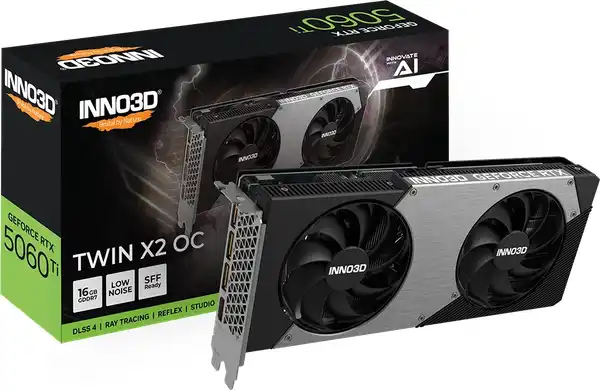
Nvidia's mid-range RTX 5060 Ti delivers roughly 15% better performance than its direct predecessor, the RTX 4060 Ti. That's an unremarkable gen-over-gen improvement, but multi-frame generation helps it punch above that number in supported titles.
The problem is price. At this writing, basic AIB models are sitting at $600 or more, which is unreasonable compared to the RX 9060 XT 16GB. AMD's card offers comparable performance and uses the same RDNA 4 architecture as the well-regarded RX 9070 series, just with the smaller Navi 44 chip. So you get RDNA 4's ray tracing and compute efficiency gains without paying the Nvidia premium.
Relative Performance of Mid-Range Graphics Cards in 2026
UL's 3DMark Time Spy benchmark continues to be a reliable proxy for real-world gaming performance in rasterization workloads.
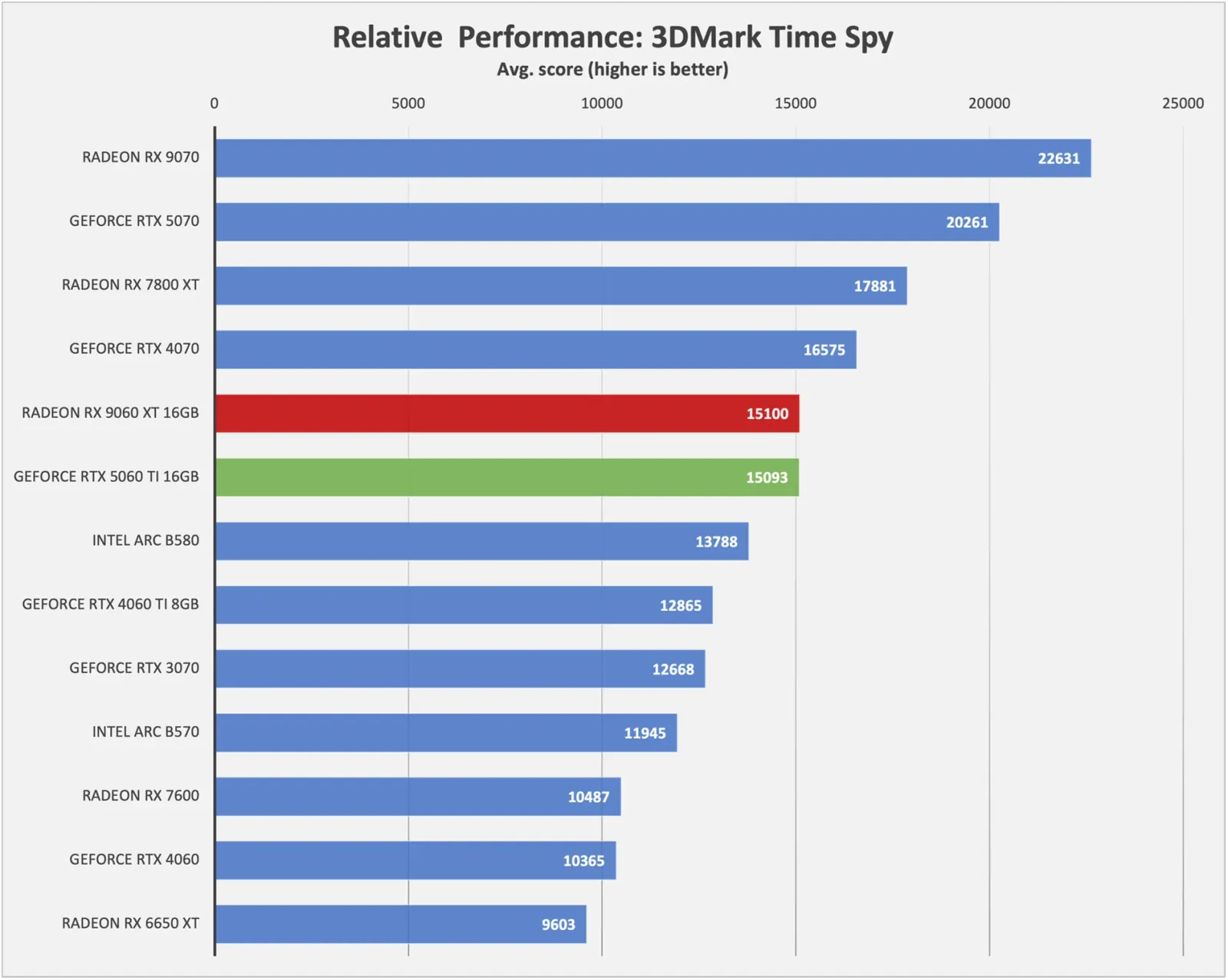
It's worth noting that the RTX 5060 Ti 16GB has a slightly larger advantage in actual games than synthetic benchmarks suggest, although it varies a great deal from one game to another.
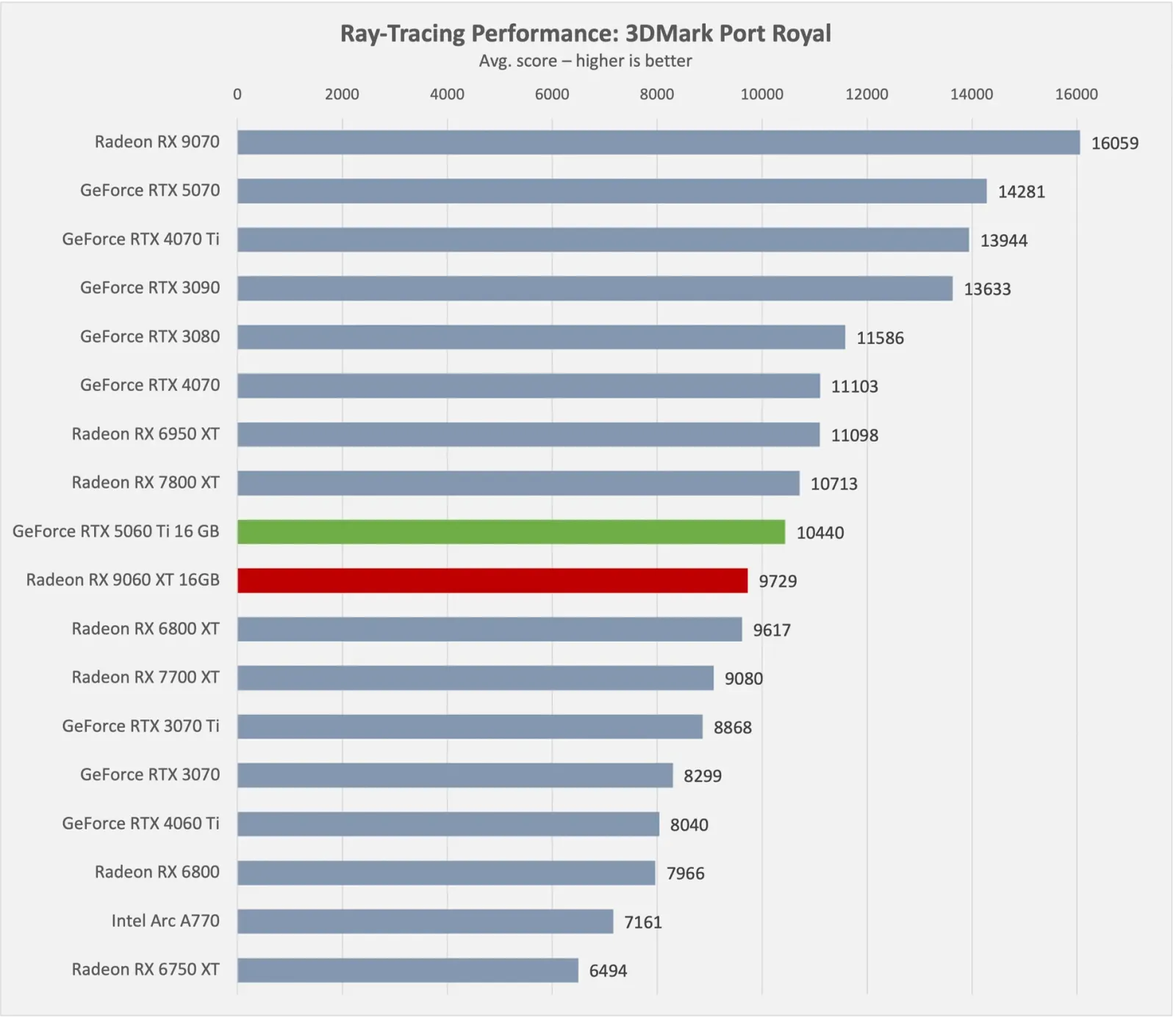
Nvidia's ray-tracing advantage is real but has narrowed. RDNA 4 brought AMD's RT performance up significantly compared to the RDNA 3 generation, and the RX 9060 XT is no longer the near-non-starter for RT workloads that the RX 7000 series was.
Buy Now or Wait?
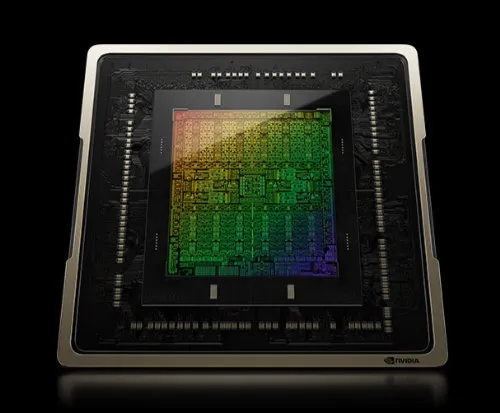
Both the RTX 5060 Ti and RX 9060 XT launched in 2025, and are about a year old now. There are still successor on the horizon, however. Nvidia's rumored "Super" refresh, meant to bring more VRAM and a modest performance bump, is stuck in limbo, as we reported back when it was merely delayed. More recent info points to a potential CES 2027 reveal.
The RTX 60-series and AMD's next-generation RDNA 5 architecture are further out still, likely 2027 at the earliest and possibly slipping into 2028 if the memory crunch continues unabated. If you're holding out for a meaningfully faster card at a similar price, you could be waiting for some time.
AMD did add one new card to this segment: the Radeon RX 9070 GRE, which launched globally on June 1, 2026. It doesn't really replace either the RX 9060 XT or the RX 9070 so much as slot in (awkwardly) between them.
Best GPU Under $500: Radeon RX 9060 XT 16GB
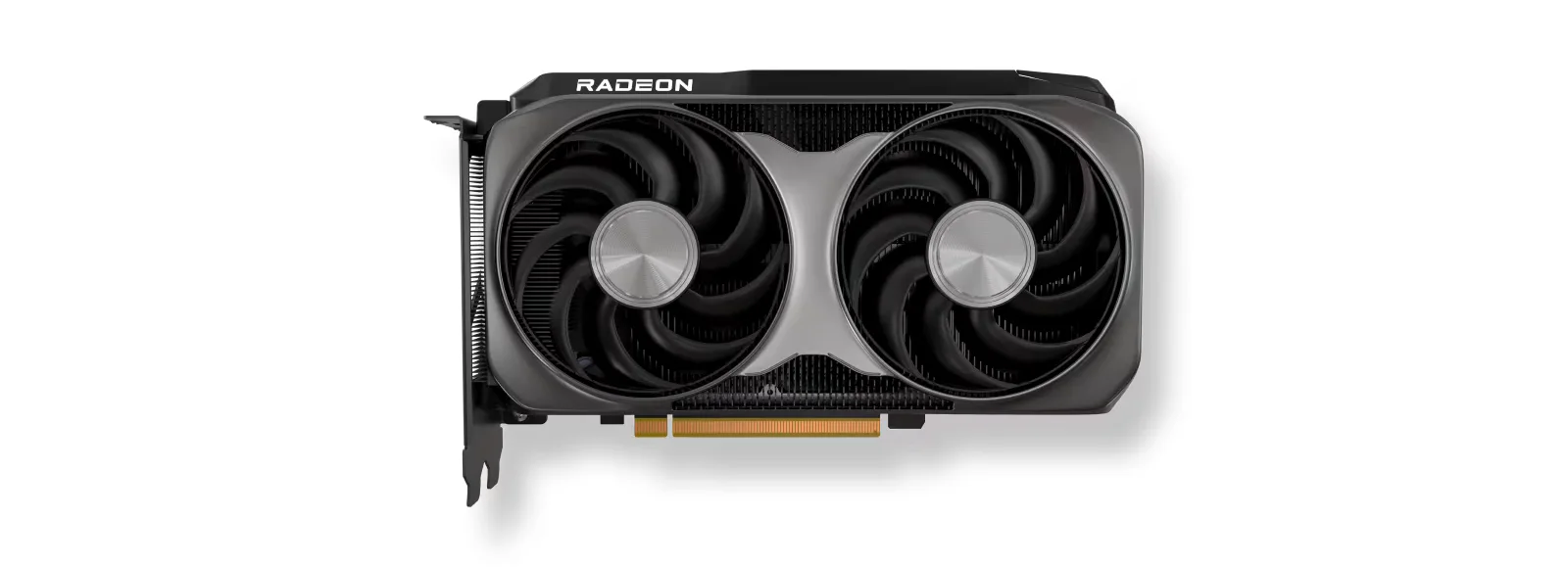
AMD's RX 9070 lineup earned plenty of praise for its efficiency gains and massively improved ray-tracing performance, and the Radeon RX 9060 XT 16GB shares that same RDNA 4 architecture.
The difference is that it's built on the smaller, cut-down Navi 44 chip. By comparison, the RX 9070 (non-XT) outpaces the RX 9060 XT 16GB by as much as 50%. What it delivers instead is a solid 1080p and entry-level 1440p experience, at a price that actually tends to hold under $500.
A few months ago, we ranked the RTX 5060 Ti 16GB first, but price is now the whole story: The RX 9060 XT 16GB isn't far behind the 5060 Ti 16GB in raw gaming performance, and it currently costs significantly less.
The trade-off is Nvidia's DLSS 4.5's multi-frame generation and a bit of ray-tracing performance, and while AMD's FSR 4 upscaling has closed much of the gap, it still isn't quite at parity.
Shopping links:
Best Feature Set (If Under $500): GeForce RTX 5060 Ti 16GB
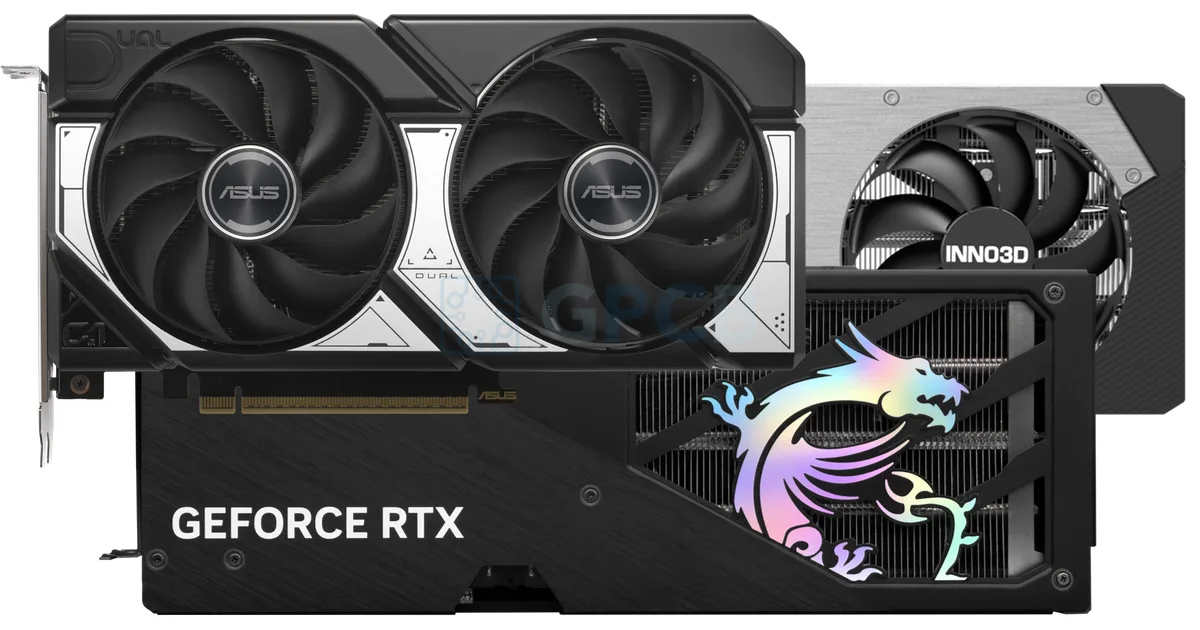
Nvidia's GeForce RTX 5060 Ti was never a revolutionary upgrade over the RTX 4060 Ti to begin with. Rasterization performance improves by less than 15% on average, and against the older RTX 3060 Ti, you're looking at roughly 30% more performance. Those aren't blockbuster numbers by any stretch.
What made the card worth considering was the complete package around it. DLSS 4.5 with multi-frame generation delivers a substantial performance boost in supported titles, and while AMD's FSR 4 offers strong competition these days, Nvidia still holds an edge in frame generation quality and the sheer number of supported games. The 16GB of VRAM also helps the card age gracefully as textures and asset sizes keep climbing in newer releases.
The catch, as mentioned above, is that the card has effectively priced itself out of its own category. At $599 or so in the US, it's no longer really "a GPU under $500" so much as "a GPU that used to be under $500." If you find one closer to its $429 launch price, whether through a sale, a bundle deal, or just luck, it's still an excellent choice.
Shopping links:
Flexible Budget? What You Get for Less Or Slightly More
It's useful to know what sits in the neighboring price brackets. Some of these cards offer better value than either of our two main picks, depending on what you're after.
More Expensive Alternative #1: Radeon RX 9070 (non-XT)
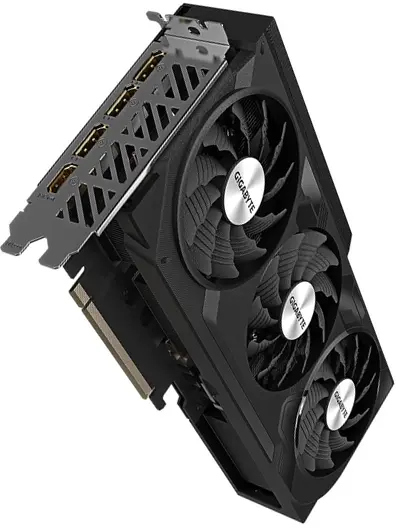
Street prices for the Radeon RX 9070 are up along with everything else, but the gap versus the RX 9060 XT 16GB has stayed roughly the same in percentage terms.
The performance jump still justifies the premium if 1440p gaming without heavy upscaling matters to you. The RX 9070 runs roughly 40 to 50% faster than the RX 9060 XT 16GB, making it a comfortable choice at 1440p natively and viable at 4K with FSR.
It is typically listed well above its $549 MSRP but is definitely worth considering if raw 1440p performance matters more to you than staying under $500 at all costs. Entry-level AIB models sit around $649.
Shopping links:
More Expensive Alternative #2: Radeon RX 9070 GRE
AMD quietly expanded its lineup on June 1, 2026 with the formerly China-only Radeon RX 9070 GRE (short for Golden Rabbit Edition). It uses the same Navi 48 GPU as the RX 9070 and RX 9070 XT, just cut down to 3,072 shading units, a 192-bit memory bus, and 12GB of GDDR6 instead of 16GB.
In performance terms, the GRE lands about where its cut-down spec sheet suggests it should. Reviewers have measured it running roughly 25 to 28% faster than the RX 9060 XT 16GB and about 12 to 16% slower than the RX 9070.
The launch didn't go smoothly on the pricing side. AMD set the GRE's MSRP at $549, identical to the RX 9070's original list price, for a card with 4GB less VRAM, a narrower bus, and meaningfully lower performance. Reviewers weren't shy about pointing that out, and early demand reportedly started slow as a result. The saving grace is that board partner cards have already slipped a bit lower at some retailers. At a price closer to $500, the GRE is actually a reasonable middle ground between the RX 9060 XT 16GB and the RX 9070.
Shopping links:
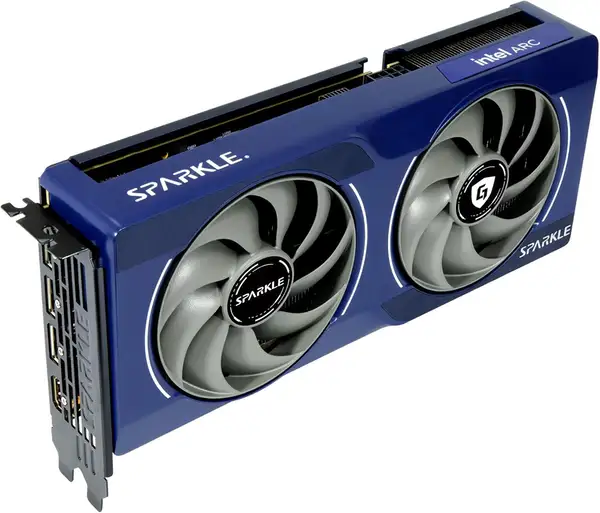
More Affordable Alternative: Intel Arc B580
Intel's Arc Battlemage GPU lineup has received significantly better reception than the original Arc 700-series cards. Intel invested heavily in driver improvements, and it shows in the B580's real-world performance.
The card delivers performance largely comparable to the RTX 3060 Ti while offering 12 GB of VRAM, more than many competing cards in its price range.
Unlike higher-end options, the Arc B580 hasn't faced quite the same price increases (due to lower popularity), making it attractive as memory costs drive up prices everywhere else. However, it won't compete with the RTX 5060 Ti or RX 9060 XT, so consider it only if your budget is tight or you primarily game at 1080p.
Shopping links:
Used Graphics Cards Under $500
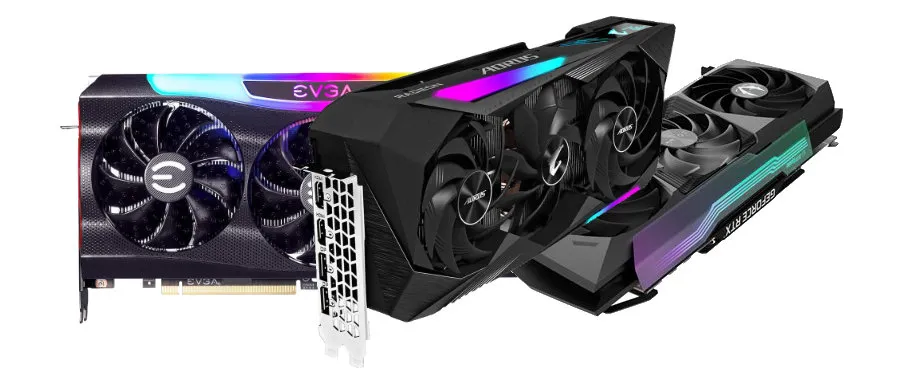
The secondary market is worth a look in this environment. However, used prices have risen alongside new prices as many are on the lookout for alternatives to inflated retail listings.
A few previous-generation cards worth considering if you find them at the right price:
- Nvidia GeForce RTX 3080 10GB – still a capable card that exceeds both the RX 9060 XT and RTX 5060 Ti in rasterization performance. Watch for used models in the $350–$450 range. On the downside, there is no DLSS 4 Multi Frame Generation support (that feature requires RTX 40 or 50 series), but DLSS upscaling works well.
- AMD Radeon RX 6950 XT – AMD's older flagship holds up well in rasterization workloads and can sometimes be found used for under $500. It outpaces both current mid-range cards at the cost of a much higher TDP (335W).
- AMD Radeon RX 6800 – the RX 6800 offers solid 1440p performance at prices that could make sense if you find a good deal.
- Nvidia GeForce RTX 3070 Ti – the GDDR6X variant is a little faster than the standard 3070 and should be cheaper used than the 3080. Roughly equivalent to the RTX 5060 Ti 8GB in synthetic benchmarks, but with an 8GB VRAM cap.
When buying used, remember to verify the card's condition, remaining warranty (if any), and the seller's reputation.
Wrapping Up
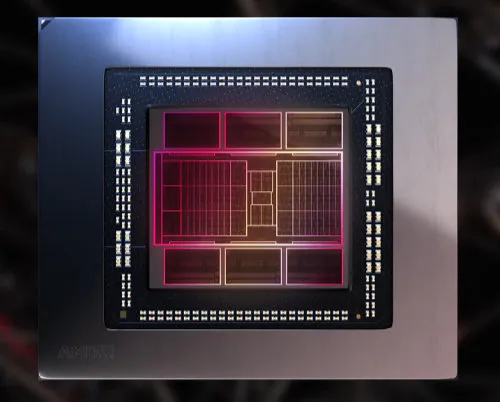
As of August 2026, the Radeon RX 9060 XT 16GB is the more sensible choice under $500. It's the only major 16GB card that reliably stays under that ceiling. The raw performance difference against the RTX 5060 Ti 16GB is small, and you'll typically save at least $100 over its main competitor.
The GeForce RTX 5060 Ti 16GB hasn't gotten worse as a card (it was our first choice in the previous update). DLSS 4.5's frame generation and stronger ray-tracing performance are true advantages. It's simply gotten more expensive by enough that it no longer compares well to the AMD alternative. Keep an eye out for sales, though.
Comments (2)
- KlausKFAny news on when / if there will be a 4060 Ti Super? At any rate the original 4060 Ti should get a prioce cut to match its performance in the new RTX lineup...
- Jesper BergNo news on any RTX 4060S or 4060 Ti Super yet that I know of. But something of that nature is likely to arrive eventually. The Ti is a slightly cut version of the AD106 GPU so there's room for improvement.
Comments are closed.