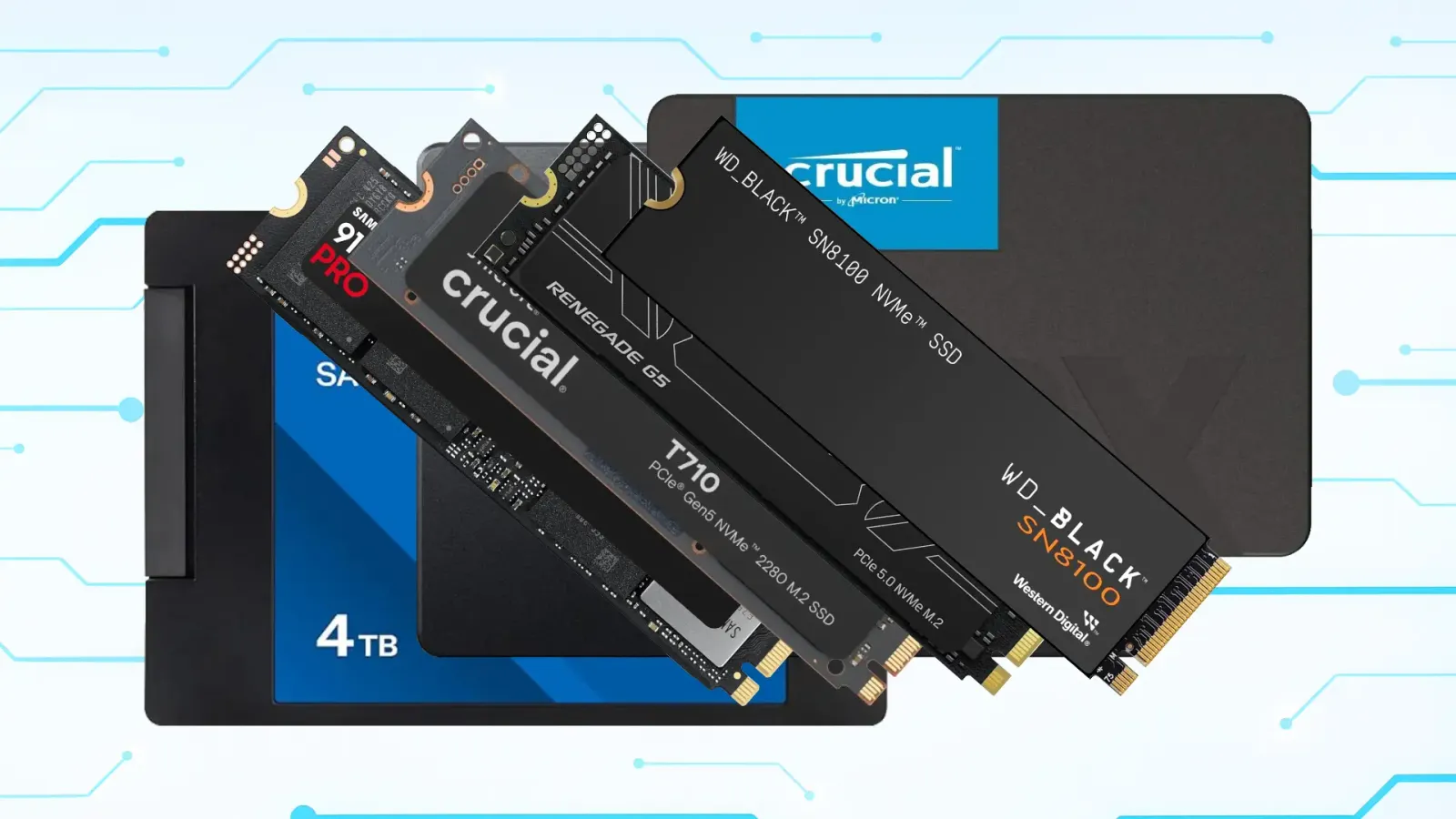

If you work with storage-heavy apps or simply want quick access to your entire Steam library, there is no substitute for a high-capacity SSD. Four terabyte SSDs are now common, and even 8TB models have become increasingly available in the consumer market.
The bad news is that nearly a decade of declining SSD prices is now in reverse. A NAND flash memory shortage driven by AI demand has sent prices soaring and created supply constraints that will persist at least through 2026, making purchase decisions more difficult.
Here, we've rounded up the best 4TB SSDs from major manufacturers as of early 2026 based on our own testing and market research. The short version is that most high-end M.2 SSDs now come in a 4TB variety, as do many 2.5" SATA models.
Fastest Vs. Best Value 4TB & 8TB M.2 SSDs
Cost per GB is always a key factor when buying storage, though the NAND shortage is compressing the usual price differences between budget and premium tiers. You'll still pay a premium for PCIe 5.0 capability, which isn't necessary if your system runs PCIe 4.0, but that gap has narrowed as Gen4 prices have risen faster than Gen5 ones in percentage terms.
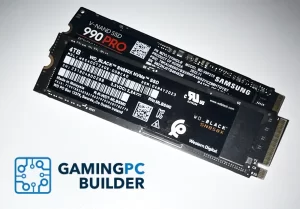
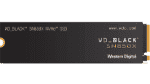
Released in May 2025, the WD Black SN8100 is SanDisk's current flagship Gen5 SSD. It uses a custom Silicon Motion SM2508 controller paired with Kioxia's 218-layer BiCS8 TLC NAND to deliver exceptional performance while running cooler than competing Phison E26-based drives. It's one of the fastest consumer SSDs available, and outpaces the Samsung 9100 PRO by around 25% in the 3DMark Storage Benchmark. Notably, the 4TB model is single-sided, so it's a good fit for compact builds and laptops.
You can also get either of these two flagship drives in an 8TB capacity, but that requires very deep pockets in the current market.
For those on PCIe 4.0 systems, the Samsung 990 PRO remains the fastest Gen4 drive we've tested running right up to the limits of the PCIe 4.0 interface at 7,450/6,900 MB/s sequential.
In the value segment, SanDisk's WD Black SN7100 is of the best budget/mainstream NVMe SSDs. This DRAM-less drive uses Host Memory Buffer (HMB) technology and delivers impressive performance for its price point, making it particularly suitable for laptops and handheld gaming devices.
High-End 4TB M.2 NVMe SSDs
A high-end 4TB M.2 SSD makes an excellent system drive, especially in single-drive configurations. Most flagship SSDs now come in 4TB capacities. Read our comprehensive writeup about the best M.2 drives for detailed information. These drives are market leaders so far in 2026:
Flagship Gen5 SSDs
| Name | Max. seq. read/write (MB/s) |
4K random read/write (IOPS) |
Endurance rating (TBW) |
Shopping Links |
Latest Price* |
|
|---|---|---|---|---|---|---|
 |
WD_Black SN8100 (4TB) |
14900/14000 | 2.3M/2.4M | 2,400 TBW | Amazon |
|
 |
Kingston Fury Renegade G5 (4TB) |
14800/14000 | 2.2M/2.2M | 2,400 TBW | Amazon | |
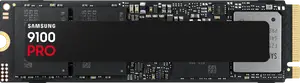 |
Samsung 9100 PRO (4TB) |
14800/13400 | 2.2M/2.6M | 2,400 TBW | Amazon | |
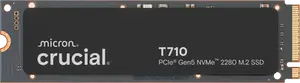 |
Crucial T710 (4TB) |
14500/13800 | 2.2M/2.3M | 2,400 TBW | Amazon Newegg Amazon UK |
|
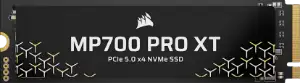 |
Corsair MP700 PRO XT (4TB) |
14900/14700 | 2.7M/3.3M | 2,400 TBW | Amazon |
*Prices are updated automatically at regular intervals but are subject to change between updates.
There are many compelling Gen5 alternatives at 4TB, especially since the controller landscape has improved considerably since the early days of Gen5 – when every single drive used Phison's E26. E26-based SSDs ran hot enough to throttle under sustained loads and required active cooling or large passive heatsinks. The newer generation of controllers – Silicon Motion's SM2508 (used in the SN8100, Fury Renegade G5, and T710) and Phison's E28 (used in the MP700 PRO XT) – are built on 6nm processes and run cooler.
High-End Gen4 SSDs
| Name | Max. seq. read/write (MB/s) |
4K random read/write (IOPS) |
Endurance rating (TBW) |
Shopping Links |
Latest Price* |
|
|---|---|---|---|---|---|---|
 |
Samsung 990 PRO 4TB | 7450/6900 | 1.55M/1.4M | 2,400 TBW | Amazon Newegg |
|
 |
WD Black SN850X (4TB) | 7300/6600 | 1.2M/1.1M | 2,400 TBW | Amazon Newegg Amazon UK |
|
 |
Kingston Fury Renegade (4TB) | 7300/7000 | 1M/1M | 4,000 TBW | Amazon Newegg Amazon UK |
*Prices are updated automatically at regular intervals but are subject to change between updates.
Using a high-end Gen4 NVMe SSD as a system drive is still entirely viable in the Gen5 era. You will struggle to notice the difference in everyday use, but you will clearly notice the pricing difference compared to flagship PCIe 5.0 drives, even if the NAND shortage has reduced the gap between Gen4 and Gen5.
Best Value 4TB M.2 NVMe SSDs
If you are looking to minimize the cost per GB without sacrificing too much performance, there are many affordable M.2 SSDs to choose from in the Gen4 space. Most use 4-channel controllers and in some cases cheaper, QLC NAND. Unfortunately, QLC's cost advantage has largely evaporated in the current market.
| Name | Sequential read/write (MB/s) |
NAND Type |
Endurance | Latest Price* |
Check Availability |
|
|---|---|---|---|---|---|---|
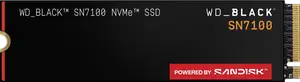 |
WD Black SN7100 (4TB) |
7000/6700 | TLC | 2,400 TBW/ 5-Year |
Amazon | |
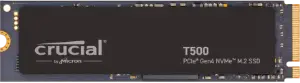 |
Crucial T500 (4TB) |
7000/6900 | TLC | 2,400 TBW/ 5-Year |
Amazon | |
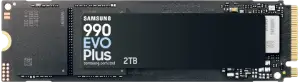 |
Samsung 990 EVO Plus (4TB) |
7250/6300 | TLC | 2,400 TBW/ 5-Year |
Amazon | |
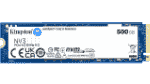 |
Kingston NV3 (4TB) |
6000/5000 | QLC | 1,280 TBW/ 5-Year |
Amazon | |
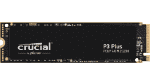 |
Crucial P3 Plus (4TB) |
4800/4100 | QLC | 800 TBW/ 5-Year |
Amazon |
The WD Black SN7100 stands out in this tier. It's DRAM-less but the drive's sequential speeds (7,000/6,700 MB/s) are still excellent. PCWorld noted it set records for a HMB-based design. Samsung's 990 EVO Plus is another solid TLC option in this tier. Our best budget NVMe guide covers additional value-tier options in more depth.
QLC NAND should arguably be avoided until pricing improves. It offers lower durability compared to TLC, yet QLC drives aren't meaningfully more affordable right now. When you can get solid TLC-based SSDs for similar prices, the choice is easy.
High-Capacity 2.5" SATA SSDs
If you're looking for lots of fast internal storage at a more reasonable cost per GB, SATA drives should offer better prices compared to their M.2 PCIe counterparts. However, the NAND shortage has affected SATA pricing as well. For quite some time Samsung was the only manufacturer with 4TB or larger consumer SSDs in the market, but additional options have emerged.
| Name | Max. seq read/write (MB/s) |
4K random read/write (IOPS) |
NAND | Endurance rating |
Check Price |
|
|---|---|---|---|---|---|---|
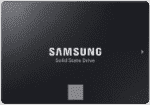 |
Samsung 870 EVO (4TB) | 560/530 | 98K/88K | TLC | 2,400 TBW | Amazon |
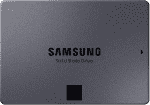 |
Samsung 870 QVO (4TB) | 560/530 | 98K/88K | QLC | 1,440 TBW | Amazon |
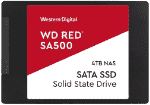 |
WD Red SA500 (4TB) | 560/530 | 95K/82K | TLC | 2,500 TBW | Amazon |
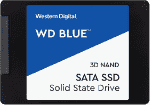 |
WD Blue (4TB) | 560/530 | 95K/82K | TLC | 600 TBW | Amazon |
Sequential performance is almost identical across the board, which isn't surprising considering that the best SATA SSDs have maxed out the 6 Gbit/s interface for years. The 2.5" form factor remains interesting mainly for order systems or NAS storage with no spare M.2 slots. Practically any recent SSD in a 10 Gbps or faster NVMe enclosure will actually outperform internal SATA drives, which are limited by the 6 Gbps interface.
Samsung's 870 EVO was long the standard recommendation at 4TB (and for SATA in general), and it remains available.
8TB SSDs: Largest Consumer SSDs Available
While significantly larger capacities exist in the enterprise market, eight terabyte consumer SSDs are still relatively rare. They were prohibitively expensive even before the NAND shortage, and the current market isn't helping.
The most affordable 8TB SSD by a wide margin used to be the Samsung 870 QVO, but even this QLC-based SATA drive is now insanely expensive. If you need this capacity, you will find much better value (and long-term viability) in the M.2 space.
Other 8TB M.2 NVMe/PCIe Models
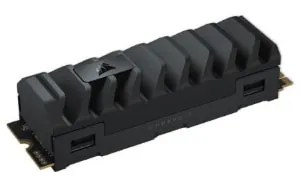 1. Corsair MP600 Pro XT
One of the very few high-end M.2 drives that come in an 8TB version is the Corsair MP600 Pro XT. This flagship SSD from Corsair uses premium 176-layer NAND memory chips and the Phison E18 controller, resulting in sequential read/write performance of 7,100 MB/s and 6,800 MB/s, respectively. Random performance in the 4TB and 8TB capacities is also very impressive at 1M/1.2M read/write IOPS. The endurance rating is 6,000 TBW. Additionally, it comes bundled with a large aluminum heat spreader that is not optional but can be removed if it doesn't fit in your build.
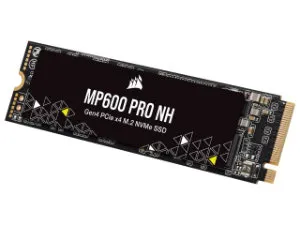 2. Corsair MP600 Pro NH
Corsair is more active than other manufacturers in the high-capacity space, with several drives on the market with confusingly similar designations. The MP600 Pro NH has a lot in common with the MP600 Pro XT, however, as they both use the Phison E18 controller and TLC NAND. There are also a few differences, most notably that the NH comes with no heat spreader and a more modest price tag. Sequential performance is also slightly behind at 7,000 MB/s (read) and 6,800 MB/s, but you get the same massive 6,000 TBW endurance rating with the 8TB model.
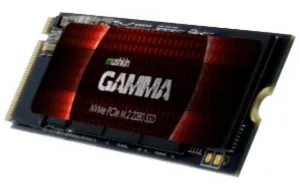 3. Mushkin Gamma
The 8TB Mushkin Gamma is yet another high-end Gen4 M.2 SSD powered by the Phison E18 controller but is specified as being slightly slower than the Corsair models (likely due to previous-gen NAND). It still gets quite close to the bandwidth limits of the PCIe 4.0 interface with a sequential performance of 7,000 MB/s (read) and 5,900 MB/s (write). Random performance is 700K/1M IOPS (read/write).
External/Portable 4TB SSDs
If you just want lots of really fast storage to go, you actually have quite a few options. Unlike hard drives, solid state drives are not limited by the size of spinning platters, only by how the manufacturers decide to arrange the memory chips and layout of the PCB. Therefore they may vary greatly in size and shape.
What to keep in mind when shopping for an external SSD include the drive's rated performance and its interface. The best-performing drives use either the USB 3.2 Gen 2 or Thunderbolt interfaces. Here are some of the most popular models right now:
 Samsung Portable SSD P9 (USB4) – Announced at CES 2026, Samsung's P9 is the world's first 8TB external SSD with USB4 support, delivering up to 4,000 MB/s transfer speeds. Samsung claims the P9 improves read power efficiency by 333% and write efficiency by 405% compared to previous generations.
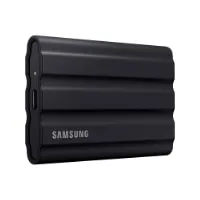 Samsung T7 Shield (USB 3.2 Gen 2) – Samsung's T7 Shield comes in a rugged aluminum enclosure and offers transfer rates of up to 1050 MB/s via a 10 Gbps USB interface. It's also highly portable with a thickness of just 0.5 inches.
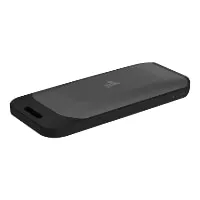 Corsair EX100U (USB 3.2 Gen 2x2) – Using the 20 Gbps USB 3.2 2x2 interface, the Corsair EX100U can reach sequential transfer rates of up to 1600 MB/s (read) and 1500 MB/s (write), respectively. At 0.43 inches, it's nevertheless even thinner than the Samsung T7.
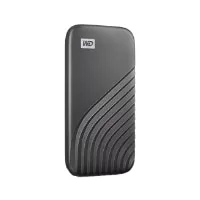 WD My Passport SSD (USB 3.2 Gen 2) – Western Digital's portable SSDs come in more conventional, HDD-inspired enclosures. The difference is that they are significantly smaller and, of course, much faster. In the latest incarnation, the My Passport SSDs use the 3.2 Gen 2 USB interface and offer read speeds of up to 1050 MB/s.
Build Your Own External SSD
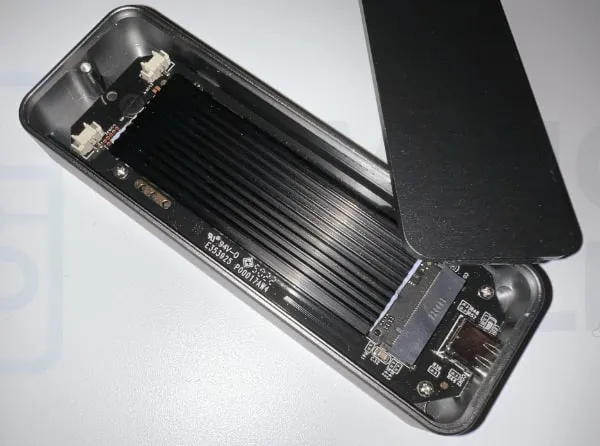 When shopping for external storage, it's also worth comparing the cost of a DIY alternative. Buying an affordable 4TB M.2 SSD and installing it in an M.2 PCIe/NVMe enclosure will often result in decent savings compared to branded external SSDs.
You also get to choose your own interface. Most external SSDs are limited to 10 Gbps USB 3.2 Gen 2, which is below spec for nearly all NVMe SSDs. Enclosures are also mostly 10 Gbps, but you are also free to opt for 20 Gbps USB 3.2 Gen 2x2 all the way up to 40 Gbps USB4/Thunderbolt.
NAND Memory Types and Endurance Ratings
As you may have noticed from the specs, the main differentiator in SATA SSD price brackets isn't performance but endurance measured in terabytes written (TBW). For most users this isn't a concern, since consumer drives in normal desktop use accumulate writes far slower than their TBW limits. Even a drive rated at 600 TBW, used in a typical desktop, will likely outlast the system it's installed in.
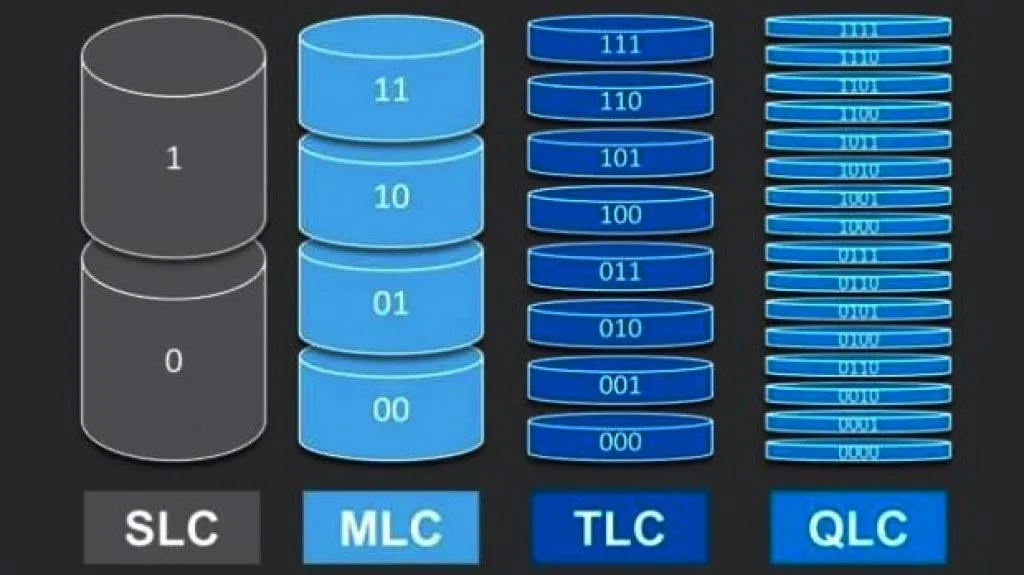
What mainly affects endurance is the type of NAND memory chips used. These are exemplified in Samsung's 2.5" lineup by the 860 QVO (quad-level cell or QLC NAND), the 860 EVO (triple-level cell or TLC NAND), and the increasingly rare drives that still use multi-level cell (MLC) NAND.
MLC memory is the oldest NAND generation but still the superior technology in terms of performance and endurance. MLC has been mostly replaced by newer, denser TLC, which is somewhat slower and less durable. The most modern and least durable type today is QLC, which stores four bits per cell rather than three. This improves density at a cost of voltage drift and correction overhead in each transistor, which is why QLC drives throttle more aggressively under sustained writes and carry lower TBW ratings.
In today's market, the practical argument for QLC over TLC is weaker than it used to be (and it wasn't very strong to begin with). The NAND shortage has compressed the already-small price gap between the two types, so there's little reason to accept the lower endurance and sustained performance of QLC.
Summary
If money is no object, or you happen to run a data center, it's possible to buy SSDs in much greater capacities than 8TB, such as Samsung's 30.72 TB PM1643. Enterprise drives are only limited by what businesses are willing to pay – which is typically a lot more than the average consumer. Prohibitive prices are what hold back ultra-high-capacity SSDs in the consumer space today.
The good news is that SSD technology continues advancing, with higher capacities becoming available each year. The concerning news in 2026 is that the NAND shortage is having a very noticeable effect on pricing. What was once a steady march toward cheaper storage is currently the opposite. A 1Tb TLC chip that cost $4.80 in July 2025 was $10.70 in December. Prices are expected to continue rising through 2026 and potentially into 2027.
PC builders on a tight budget may have to return to combining a lower-capacity SSD with a traditional hard drive for backups and infrequently accessed files. However, certain categories of users benefit significantly from large amounts of fast storage space. Photo, video, and audio editing professionals come to mind, as do gamers with extensive libraries of modern titles that now routinely exceed 100 GB per game.
The options are more plentiful than ever before, but purchasing decisions have become more critical. With all 2026 NAND production capacity already sold out and new fabrication capacity not coming online until 2027, waiting for lower prices is a long-term strategy.
Comments (7)
- GaXThanks. Please, note that the article text still states: "The VectoTech Rapid is bound by the limits of the USB 3.0 (or USB 3.1 Gen1) interface and it’s, therefore, slower than its competitors". On the other hand: Brand new higher-capacity internal SSD (4 TB & 8 TB) from Micron will allow higher-capacity external portable SSD https://forums.macrumors.com/threads/brand-new-higher-capacity-internal-ssd-4-tb-8-tb-from-micron-will-allow-higher-capacity-external-portable-ssd.2208536
- GaXVectoTech Rapid take apart disassemble would be great to see internal SSD. Is it Micron? On the other hand, your information is outdated: VectoTech Rapid 2TB External SSD USB-C Portable Solid State Drive (USB 3.1 Gen 2) https://www.amazon.com/VectoTech-Rapid-External-Portable-Solid/dp/B01JKMZ6L6 Check out the pictures with USB C connector and cables. Albeit the speed is outdated. Amazing!
- adminThanks for the info, will uppdate asap. I have yet to see a full review of the vectotech. But Micron or Toshiba NAND would be the most likely.
- GaXMore with updated speed information: VectoTech Rapid 4TB External SSD USB-C Portable Solid State Drive (USB 3.1 Gen 2) Super fast Read/Write speeds up to 540Mb/s https://www.amazon.com/dp/B01NC1RI61
- have a look at this 8TB Micron 5210 Enterprise drive https://www.amazon.com/Micron-MTFDDAK7T6QDE-7-68TB-2-5-Inch-Enterprise/dp/B07JQ2F2WG/ref=sr_1_3?dchild=1&keywords=8TB+SSD&qid=1590085643&s=electronics&sr=1-3
- Michael TchongYou forgot the OWC Express 4M2 NVMe, which offers true Thunderbolt 3 performance. You can bolt in four Sabrent 1TB Rocket NVMe PCIe M.2 SSDs and get a 4TB external drive with 2,883 MB/s read speeds for about $900. ?
- Jesper BergThanks for the tip Michael! Will add it in next update.
Comments are closed.